

You are typing an email, a product page, or a school report, and your cursor suddenly stops. Do you write customize or customise? That tiny letter swap can look like a typo to some readers and perfectly normal to others. The customize or customise question trips up writers, marketers, and students every day, so let’s settle it clearly.
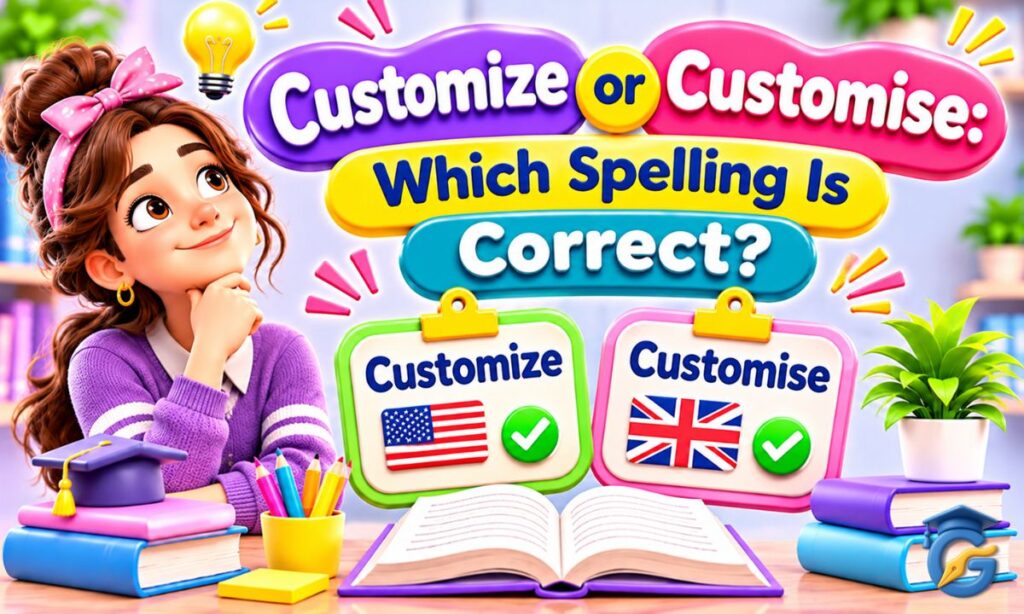
The short answer is simple. Customize is the American spelling, and customise is the British spelling. Both mean the same thing, and both are correct in the right place. In this guide, you will learn how customize or customise works, where each spelling comes from, and which one fits your audience, so you can choose with confidence every time.
Customize
Customize is the spelling used in American English and in Canadian English. In the customize or customise choice, it is the American pick, and it means to change something to fit a person’s needs. You can customize a phone case, a resume, a dashboard, or a workout plan. The word follows the standard American pattern of using -ize for verbs, just like organize, realize, and recognize.
Customise
Customise is the spelling used in British English, and also in Australian, New Zealand, and Irish English. In the customize or customise choice, it is the British pick, with the same meaning. A British shop might invite you to customise a sofa fabric. The word follows the British habit of using -ise in many verbs, such as organise and recognise.
Customize or Customise – Quick Answer

Here is the direct answer to customize or customise. Use customize for American and Canadian readers. Use customise for readers in the United Kingdom, Australia, New Zealand, and Ireland. Both spellings are correct, and neither one is a misspelling. The only real rule is consistency, so pick one spelling and keep it throughout your whole text.
Think of customize or customise as a regional choice, much like color and colour. The meaning does not change, the pronunciation sounds the same, and the grammar works the same way. If your readers live mostly in the United States, write customize. If they live mostly in the United Kingdom, write customise.
Meaning of “Customize/Customise”
To customize or customise something means to modify it so it suits a specific person, purpose, or situation. The word comes from the noun custom, which describes something made to order. When you customize a product, you adjust its size, color, features, or settings. As a result, the final item feels designed just for you instead of made for everyone.
Examples
Examples make the difference clear. American: “You can customize your profile with a new photo.” British: “You can customise your profile with a new photo.” Both sentences use customize or customise with one meaning. Here are two more: “She customised the menu for guests with allergies,” and “He customized his laptop with extra memory.” The spelling changes, but the idea stays exactly the same.
The Origin of Customize / Customise
The story of customize or customise begins with the word custom. Custom came into English from Old French, and it goes back to a Latin word meaning habit or usual practice. Over time, custom came to describe something made to a buyer’s own wishes, as in custom shoes or custom furniture. That meaning gave us the verb.
English then added the verb ending -ize or -ise, which means to make or to turn into. That ending traces back to Greek through Latin and French, and it gave customize or customise their start. The verb grew popular in the twentieth century, as factories, shops, and later software gave people more ways to change products.
British English vs American English Spelling

The customize or customise split is one small piece of a larger pattern. American English tends to prefer the -ize ending, while British English often prefers -ise. Other pairs follow the same path, such as realize and realise, organize and organise, and apologize and apologise. Once you learn the pattern, many spelling choices become easy.
Spelling differences became more visible in the 1800s, when American dictionary makers such as Noah Webster pushed for simpler, more regular forms. Britain kept many older habits. Today, readers in each country see their own version as normal, and they may see the other version as foreign. That is why audience matters more than any single rule in the customize or customise choice.
Comparison Table
This table shows the common forms side by side, so you can spot the pattern fast. Notice that the difference is always the letter z or s, and everything else stays the same. Use it as a quick reference when you edit, and remember that the same pattern applies to customize or customise in every word form.
| Word Form | American English | British English |
|---|---|---|
| Base verb | customize | customise |
| Third person | customizes | customises |
| Past tense | customized | customised |
| -ing form | customizing | customising |
| Noun | customization | customisation |
| Adjective | customizable | customisable |
Why Do Both Spellings Exist?
Both spellings exist because English borrowed the ending through different routes. The Greek-based -ize came into English through Latin and French, and some writers kept the z to show its Greek roots. Others followed the French form with an s. Later, American dictionaries chose -ize, and British publishers often leaned toward -ise, so two standards grew apart.
Which Spelling Should You Use?

The best answer to customize or customise depends on who will read your writing. Think about your audience first, then check your style guide, publisher, or school rules. When no rule exists, choose the spelling your readers use every day. Matching their habits makes your writing feel natural and professional, and it avoids distracting them with unfamiliar spelling.
You can also look at where your content will live. A blog for a US company, a UK university paper, and a global app each need their own customize or customise choice. Decide once, write it down in a short style note, and share it with everyone on your team. That small step prevents messy mix-ups later.
For American English
If you write for readers in the United States, use customize, customized, customizing, and customization. American dictionaries list the z forms as standard, and American schools, newspapers, and companies use them. For example, an American store would write, “Customize your order in three easy steps.” In the customize or customise choice, customise there could look like an error.
For British English
If you write for readers in the United Kingdom, use customise, customised, customising, and customisation. British newspapers, schools, and brands settle the customize or customise choice with the s forms. For example, a British retailer would write, “Customise your order in three easy steps.” The same advice applies to Australia, New Zealand, and Ireland, where the s spelling is also standard.
For International Audiences
When your readers come from many countries, the customize or customise choice needs a clear plan. Pick one spelling and stay with it. Many global brands choose American English because it is widely used in software and online services. Tip: Set your document language in your editor, such as English (US) or English (UK), so spell check keeps your spelling consistent.
For Business and Marketing Content
In business writing, spelling signals care. A product page, an email campaign, and a sales deck should all match the target market. If you sell to American shoppers, write “customize your plan.” If you sell to British shoppers, write “customise your plan.” Local spelling builds trust, and the right customize or customise form can help your pages match what people type into search.
Common Mistakes with Customize / Customise
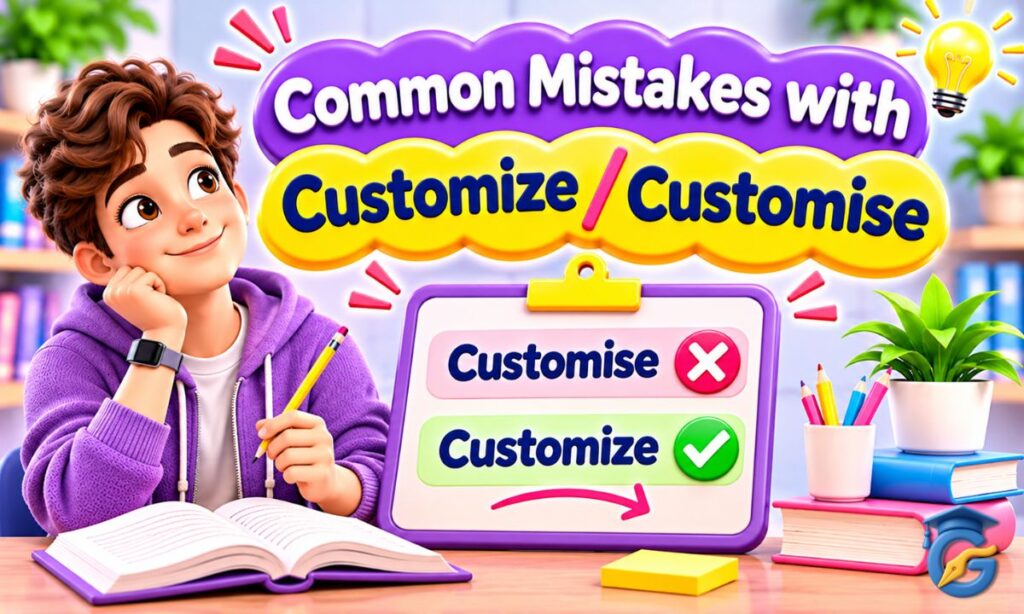
Even careful writers make small errors with customize or customise. Most mistakes come from mixing spelling styles, ignoring the audience, or choosing a similar word that does not fit the meaning. These slips seem minor, but they can make a page look rushed. A quick review before publishing catches nearly all of them.
The good news is that every customize or customise mistake below is easy to fix. You only need a clear style choice, a spell check set to the right language, and a final read-through. Use the four common mistakes as a simple checklist each time you edit a draft, an email, or a web page.
Mistake 1: Mixing UK and US Spellings
This mistake happens when a writer uses customize in one sentence and organise in the next. Mixing customize or customise styles confuses readers and makes the text look careless. For example, “We customise your order and recognize your loyalty” mixes both styles. Choose one system, such as American, and apply it to every -ize or -ise word in the text.
Mistake 2: Using Different Spellings on the Same Website
Websites often grow over time, and different writers add pages in their own style. One page says customize, and another says customise. This inconsistency can confuse visitors and makes your brand look less polished. Tip: Create a one-page style guide, and run a site-wide search to find and fix any mismatched spellings.
Mistake 3: Confusing “Customize” with “Personalize”
These two words are related, but they are not twins. Customize usually means changing options or features to fit needs. Personalize usually means adding a person’s name, data, or personal touch. A shirt with a chosen fit and fabric is customized, while a shirt printed with your name is personalized. Use each word where it fits best.
Mistake 4: Ignoring Audience Location
Writers sometimes pick a spelling out of habit and forget who will read the text. A UK reader may see customize as an American spelling, and a US reader may see customise as a typo. Check your analytics or target market before you choose customize or customise, then match the spelling to where your readers live.
Customize vs Customise in Different English-Speaking Countries
The customize or customise choice follows geography closely. In the United States, customize is the standard spelling. Canada also favors customize, since Canadian English follows the American pattern for -ize verbs while keeping some British spellings, such as colour. In the United Kingdom, Australia, New Zealand, and Ireland, customise is the usual spelling in news, schools, and business.
South Africa and India lean toward British spelling, so customise appears often there, though customize shows up in tech and global business. In international work, you will see customize or customise side by side. When you are unsure about a market, check how local brands, newspapers, and government websites spell the word, and follow that example.
Customize, Customizes, Customized, or Customizing: Correct Word Forms
Customize or customise is a regular verb, so its forms follow simple rules. Use customize for the base form, customizes for he, she, or it in the present tense, customized for the past tense and past participle, and customizing for the ongoing form. The British set works the same way: customise, customises, customised, and customising.
Examples help. “I customize my notes every week.” “She customizes each resume for the job.” “They customized the app yesterday.” “We are customizing the report now.” Whichever side of the customize or customise choice you pick, use the matching noun and adjective too, such as customization and customizable, or customisation and customisable.
Customize or Customise in Professional and Academic Writing

In professional and academic writing, customize or customise depends on the rules of the publisher, school, or journal. Many American journals require customize, while many British universities expect customise, although some British publishers use Oxford spelling, which prefers -ize. Always read the submission guidelines before you write the final draft of a paper or report.
If no rule exists, follow the spelling of your main audience and stay consistent from the title page to the references. Direct quotes are the exception to any customize or customise rule. When you quote a source, keep the original spelling exactly as written, even if it differs from your own style. This protects accuracy and shows respect for the source.
Is Customize an Acceptable British English Spelling?
Yes, in many cases it is, and that adds a twist to customize or customise. British English has two accepted styles for -ize and -ise verbs. The first is the common style, which uses -ise. The second is called Oxford spelling, which uses -ize for many words, including customize, while keeping British spelling for words like colour and centre.
Still, most British readers expect customise in everyday writing, and most British brands use it. So if you answer the customize or customise question for a general UK audience, customise is the safer pick. Use customize only if a style guide, publisher, or house rule asks for Oxford spelling.
Discover more: Nosey or Nosy: Which Spelling Is Correct in 2027?
Customize / Customise in Everyday Examples
Real life shows how often this word appears. You see it in settings menus, shopping carts, emails, and social posts. Because people meet it so often, the spelling quickly becomes a mark of regional style. The examples below show how customize or customise looks in common situations for each audience.
Notice that the sentences stay almost identical, with only one letter changing. That makes customize or customise easy to adapt for another market. You can often update a page by changing only the z to an s, or the s to a z. Always check related words too, such as customization and customisation.
Websites and Apps
Software often uses the word on buttons and menus. An American app might say, “Customize your home screen.” A British version might say, “Customise your home screen.” Short labels like these must match the user’s language setting. If your product serves both markets, create two language versions so each reader sees the spelling they expect.
Emails
In email, a friendly and clear tone works best. For American readers, you might write, “Please let me know how you would like to customize your plan.” For British readers, you might write, “Please let me know how you would like to customise your plan.” Matching the spelling shows you pay attention to your reader’s culture.
Social Media
Social posts are short, so spelling stands out. A US brand might post, “Customize your style and make it yours.” A UK brand might post, “Customise your style and make it yours.” Hashtags also vary, such as #customize and #customise, so check which one your audience uses before you pick one for a campaign.
Business Documents
Reports, proposals, and contracts need careful spelling because they reflect your company’s professionalism. A proposal to a US client may say, “We will customize the training program for your team.” A proposal to a UK client may say, “We will customise the training programme for your team.” Run a final spelling check set to the correct language.
Product Descriptions
Product pages sell better when the spelling feels familiar. An American listing might read, “Customize this mug with your name or photo.” A British listing might read, “Customise this mug with your name or photo.” Because shoppers often search with their local spelling, using it in titles and descriptions helps people find your product.
Customize vs Personalize: What’s the Difference?
Customize and personalize overlap, which is why people mix them up. To customize means to change features, settings, or options to fit a need. To personalize means to make something suit one specific person, often with a name, a photo, or past choices. The first focuses on options, and the second focuses on the individual.
Here are two quick examples. A user who rearranges the toolbar in a software program customizes it. An online store that greets you by name and suggests items based on your history personalizes the experience. Whether you customize or customise, match it with personalize or personalise, so your spelling style stays consistent.
Customize or Customise – Google Trends & Usage Data

Search data can show how readers behave, but you should always check the latest figures yourself. For customize or customise, Google Trends usually shows that customize gets far more worldwide searches, mostly because of the size of the American audience and the reach of American tech brands. Customise still shows steady interest in British English markets.
Remember that Google Trends shows relative interest rather than exact search counts. Search habits can also shift by season, device, and language setting. A smart move is to open Google Trends, enter both spellings, and filter by country to see which one your target audience searches more often. Then match your content to that spelling.
Search Popularity by Country
In the United States and Canada, searches usually lean toward customize. In the United Kingdom, Australia, New Zealand, and Ireland, searches usually lean toward customise. Many users also type the spelling that matches their keyboard language and local habits. An explanatory guide can mention both spellings, while product pages and menus should keep only one consistent form.
Usage in Published Content
In published content, the pattern follows the same geography. American news sites, software companies, and online stores use customize, while British publishers, retailers, and government pages use customise. Style guides from major publishers often settle the question for their writers. When you research your own market, scan a few top local sites and note which spelling they use most.
Comparison Table: Customize vs Customise
A final table can help you compare the two spellings at a glance. Both forms share the same meaning, pronunciation, and grammar, and they differ only in the letter before the final e. The table below also lists where each version is standard and who should use it, which makes the customize or customise decision faster.
Use this summary of customize or customise as a checklist before you publish. If the audience, style guide, and spelling all match, you are ready to go. If any one of them points a different way, pause and fix it. A few seconds of checking can save you from confusion and corrections later, especially on large websites with many writers.
| Feature | Customize | Customise |
|---|---|---|
| Variety | American and Canadian English | British, Australian, New Zealand, and Irish English |
| Meaning | To modify for a specific need | To modify for a specific need |
| Past tense | Customized | Customised |
| Noun | Customization | Customisation |
| Best for | US and Canadian readers | UK, Australian, NZ, and Irish readers |
How to Choose the Right Spelling for Your Audience
Choosing between customize or customise takes only a few steps. First, identify where most of your readers live. Next, check any style guide, school rule, or publisher rule that applies. Then set your editor’s language to match. Finally, search your document for the other spelling and fix any mix-ups before you publish.
If customize or customise still feels unclear, ask what the reader expects to see. A reader in Chicago expects customize, and a reader in London expects customise. When your audience is truly global, choose American English for its wide use in technology, or choose your home market’s spelling, and then stay consistent from start to finish.
Frequently Asked Questions
Why Do Americans Spell Customize with a Z Instead of an S?
American English adopted the -ize ending as its standard, helped by early dictionary makers who preferred simpler, more regular spelling.
Does Customize Have the Same Meaning as Customise?
Yes. In the customize or customise debate, the meaning is identical, and only the spelling changes.
What Is the Past Tense of Customize and Customise?
The past tense is customized in American English and customised in British English.
Is Customization or Customisation the Correct Spelling?
Both are correct. Use customization in American and Canadian English, and customisation in British English.
Do Canadian English Speakers Use Customize or Customise?
Canadian English mostly uses customize, following the American -ize pattern.
Conclusion
So, which is correct, customize or customise? Both are correct. Customize fits American and Canadian English, and customise fits British, Australian, New Zealand, and Irish English. The meaning, grammar, and sound stay the same, and the only difference is one letter. Knowing this helps you write with confidence for any reader.
The most important rule is consistency. Choose the spelling that matches your audience, set your editor to the right language, and apply the same style to every related word. With that habit, the customize or customise question will never slow you down again, and your writing will look polished and professional.
