

You are typing an email when your spellchecker underlines a word in red. You pause over one tiny letter and wonder about organised vs organized. It looks like a small detail, yet it appears in resumes, reports, school essays, and blog posts every single day, so getting it right helps your writing look sharp and careful.
Here is the short truth. Both spellings are correct, and the right one depends on where your readers live. This guide explains organised vs organized in plain English, with real examples, a comparison table, and easy memory tricks. By the end, you will know exactly which spelling fits your audience and how to stay consistent.
Quick Answer
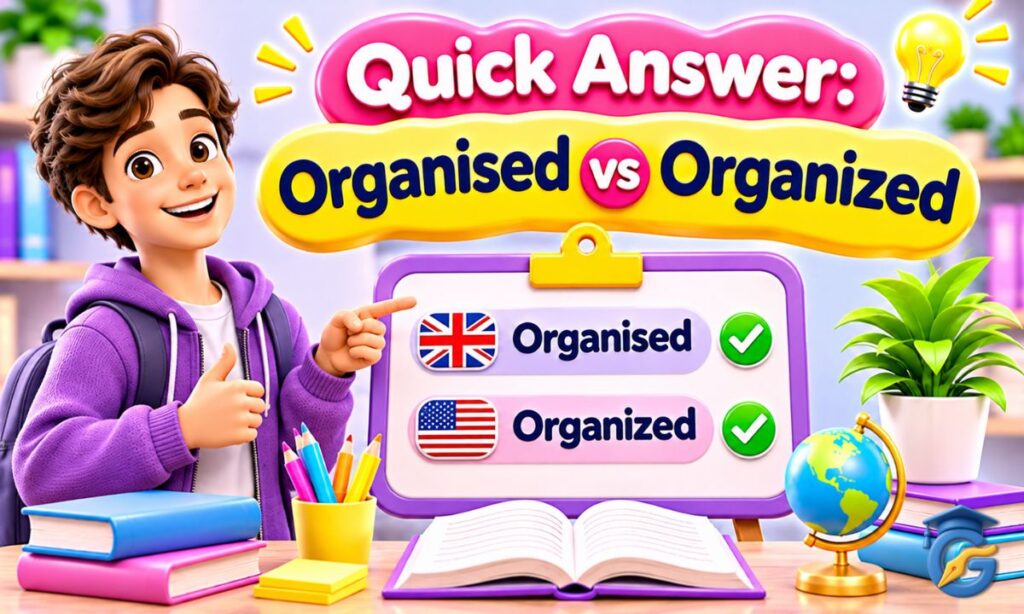
Both spellings are correct. Organized is the standard form in American English and Canadian English, while organised is the standard form in British English, Australian English, and New Zealand English. In the organised vs organized debate, neither word is a mistake, because each one belongs to a different regional spelling system.
If you write for readers in the United States, choose organized. If your readers live mostly in the United Kingdom, Australia, or New Zealand, choose organised. Whichever one you pick, use the same ending on every related word and keep it steady from the first line to the last.
The Main Difference
The only difference is one letter. Organized ends with a z, and organised ends with an s, while the meaning, grammar, and pronunciation stay exactly the same. That single letter is the whole organised vs organized difference, and it applies to the adjective and to the past tense of the verb.
This split follows a wider pattern in English spelling known as -ize versus -ise. American writers use -ize in most words of this type, and many British writers use -ise. Because the rule depends on region, you should treat it as a style choice and not as a right or wrong answer.
Comparison Table
The table below places organised vs organized side by side so you can scan the facts in seconds. It covers region, endings, related forms, and a sample sentence for each spelling. Use it as a quick reference when you edit documents for different clients, such as one in Texas and one in London.
| Feature | Organized | Organised |
|---|---|---|
| Main regions | United States, Canada | United Kingdom, Australia, New Zealand |
| Ending | -ized | -ised |
| Verb | organize | organise |
| Noun | organization | organisation |
| Meaning | Arranged in a neat or planned way | Arranged in a neat or planned way |
| Example | She keeps an organized desk. | She keeps an organised desk. |
Notice that the meaning row is identical for both words. That is why readers almost never misunderstand either spelling. The real risk is inconsistency, such as writing organized in the first paragraph and organisation in the last. Always read through the full document once more before you publish or send it.
What Organized Means
Organized is the adjective and past tense form of the verb organize. It describes something arranged in a clear, planned way, or a person who plans well and keeps things in order. An organized closet has every item in its place, and an organized student turns in work on time without last minute panic.
The word also works for groups and events. An organized protest, an organized trip, and an organized team all involve planning and coordination. In the organised vs organized comparison, the z form is the one most North American readers expect, so it appears in nearly all American books, websites, and business writing.
What Organised Means
Organised carries the same meaning as organized. It can describe a tidy space, a well planned event, or a person who manages time and tasks with ease. A British teacher might say, “Her notes are beautifully organised,” and an American teacher would say the same sentence with a z in the last word.
Writers in the United Kingdom, Australia, and New Zealand use this form every day. It appears in newspapers, government pages, and school materials across those countries. When you view organised vs organized from a British reader’s side, the s spelling simply looks normal, and the z spelling may look slightly American.
Other Words That Follow the -ise and -ize Spelling Pattern

This word belongs to a large family of verbs that end in -ize in American English and often -ise in British English. Common pairs include realize and realise, recognize and recognise, apologize and apologise, summarize and summarise, and authorize and authorise. Once you learn the organised vs organized pattern, you can apply it to dozens of other words.
Be careful, though, because some words end in -ise in every variety of English. These include advise, revise, surprise, exercise, compromise, and supervise. Their endings are part of the word itself, so there is no choice to make. Also remember that analyze in American English becomes analyse in British English, which is a slightly different pattern.
Is Organized Correct In American English
Yes. Organized is the standard American spelling, and major American dictionaries and style guides list it first. If you write for a United States audience, using organised would look like a typo to many readers. Spellcheck tools set to US English will also flag it right away, which is a helpful warning.
American schools, newspapers, and companies all follow this rule. A US resume that says “organized and detail oriented” looks polished, while “organised” may feel out of place. So in the organised vs organized choice for American readers, the z spelling is the safe and expected option every time.
Is Organised Correct In British English
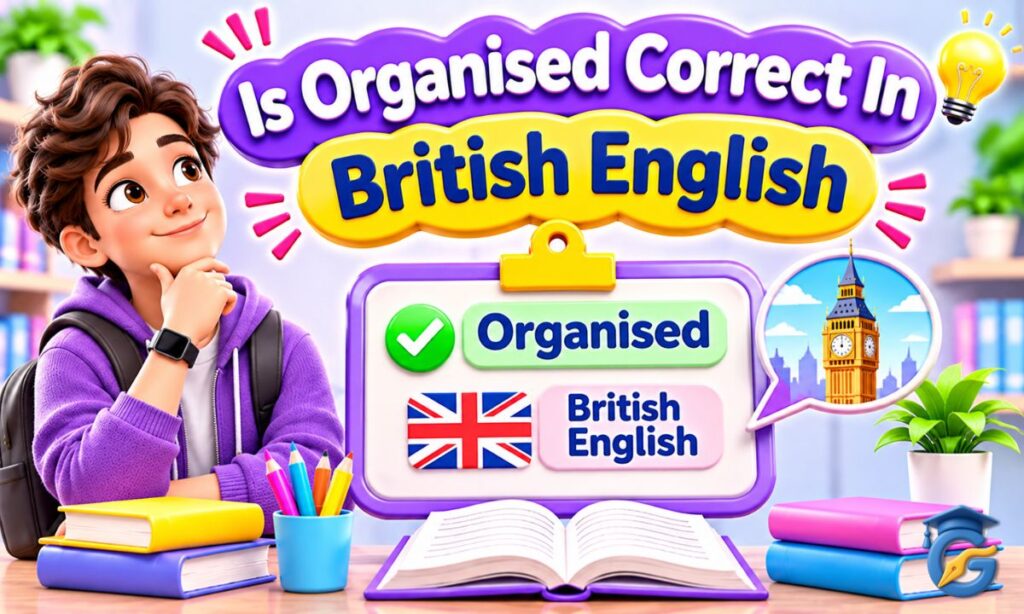
Yes. Organised is widely accepted and very common in British English, and it is the usual form in most British publishing, journalism, and everyday writing. UK spellcheck tools accept it, and British readers treat it as the default spelling in most settings, from workplace emails to school reports.
There is one small twist. Some British publishers, including Oxford University Press, prefer the -ize ending, often called Oxford spelling. So organised is correct and common in the UK, yet organized with a z is not wrong there either. The organised vs organized choice in Britain often depends on the publisher’s house style.
Why The Two Spellings Exist
Both spellings grow from the same history. English borrowed the word from French, and the French form used an s, while the older Greek based ending carried a z sound. For a long time, writers, printers, and regions used both endings, and no single rule controlled the choice before modern dictionaries arrived.
In the United States, Noah Webster’s early dictionaries pushed simpler, more phonetic spellings and helped make -ize the standard. British writing kept a mix, and -ise became more common over the twentieth century, partly because it offered one easy rule for every similar word. That history explains why organised vs organized still lives side by side today.
Pronunciation Guide
The two spellings sound exactly the same. In American English, the word is usually said as “AWR-guh-nyzd,” and in British English it is often said as “AW-guh-nyzd,” with a softer or silent r. The ending sounds like “nyzd” whether you write it with an s or a z.
Because the sound never changes, you cannot tell which spelling a person uses just by listening. This is one reason people mix them up in writing. If you say organised vs organized out loud, you will hear no difference at all, so the correct spelling must come from your audience and your style choice.
Grammar And Part Of Speech
Organized works mainly as an adjective, as in “an organized desk,” and as the past tense and past participle of the verb organize, as in “She organized the files.” It also appears in passive sentences, such as “The event was organized by volunteers.” The same grammar rules apply to organised in British English.
Common Sentence Patterns
Writers usually place organized before a noun, as in “organized files,” or after a linking verb, as in “My schedule is organized.” It also appears in patterns such as “organized by,” “organized into,” and “organized around.” These patterns work the same way in the organised vs organized comparison, with only the spelling changing.
Organized With A Person
When used for a person, the word describes habits and planning skills. “Maria is very organized” means she keeps her tasks, time, and belongings under control. Employers often use it in job posts because it signals reliability. Tip: on a US resume, write organized with a z and add a concrete proof, such as managing a calendar for ten people.
Organized With Objects
With objects, organized describes order and placement. An organized toolbox has each tool in a set spot, and organized shelves are arranged by size, color, or topic. The word tells the reader that someone built a clear system. British writers would say “organised shelves” in the same sentence, with exactly the same meaning.
Organized With Events
With events, the word shows planning and coordination. “The school organized a charity run” means people planned the route, the volunteers, and the schedule. You can also say “an organized event” to suggest it was well run. The organised vs organized choice here depends only on region and does not change how formal the sentence sounds.
Natural Sentence Examples
Examples make the difference easier to see. In American English you might write, “I organized my notes before the exam.” In British English, the same sentence reads, “I organised my notes before the exam.” Both sentences are correct, both are clear, and both give the reader the same picture without any confusion.
Here are a few more pairs. “The team is highly organized” and “The team is highly organised” mean the same thing. “She organized a surprise party” matches “She organised a surprise party.” These pairs show that organised vs organized is purely a spelling matter, with no change in tone, grammar, or meaning.
Common Spelling Mistakes
Most errors with this word are not about the dictionary but about consistency and audience. Writers pick one spelling, then drift into the other without noticing, or they apply the wrong ending to related words. The next few sections cover the most common slips so you can catch them quickly in your own drafts and edits.
Using Organised In American Writing
Using organised in American writing is a frequent slip, especially for writers who learned English in a British style school or who use UK language settings on a device. A US reader may see it as a typo. Fix it by setting your word processor to English (United States) before you begin writing.
Using Organized In A British Style
Using organized in a British style document can also cause confusion, although it is a smaller problem because Oxford spelling accepts it. Still, many UK readers will expect organised. If your brand follows a newspaper style, choose the s ending. When a client gives no style guide, simply ask which organised vs organized form they prefer.
Mixing The Two Styles
Mixing styles happens when a writer uses “organised” in one paragraph and “organized” in the next, or writes organized beside “colour.” That looks careless and can distract readers. Choose one regional style for the whole piece and check related words too, including organization, color or colour, and center or centre.
Changing The Ending Incorrectly
Some writers change the ending in the wrong way and produce forms such as “organizd,” “organizied,” or “organisd.” The correct past forms are only organized and organised. The base verb is organize or organise, and the d is simply added after the final e. Keep the e, add the d, and the spelling will be right.
Changing Related Words Inconsistently
A common inconsistency is writing “organized” but then “organisation,” or “organise” but then “organization.” Every form should match your chosen style, including organizer, organizing, reorganize, and disorganized. After you settle the organised vs organized question, use find and replace to scan the document for the opposite ending.
Discover more: Success or Sucess: Correct Spelling, Meaning & Usage Guide
Choosing Between Organized and Organised for International Readers
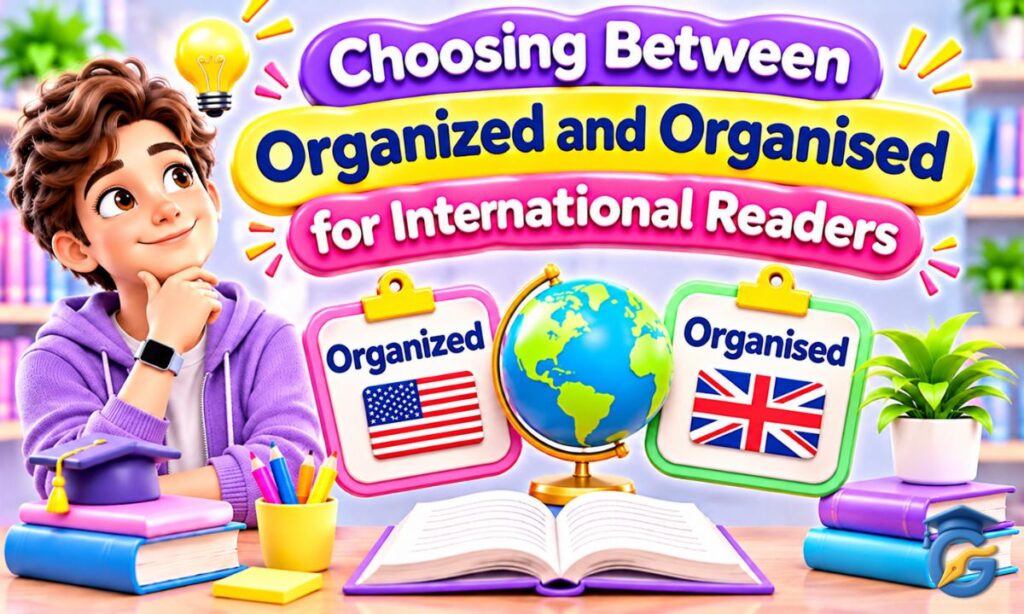
When your readers are spread across several countries, you need a simple rule. Check your largest audience, then use their spelling. If half your traffic is American and half is British, many writers still choose the spelling that matches their own location and stay consistent. The organised vs organized choice rarely changes how readers judge your message.
Some global brands choose organized with a z because it is accepted by Oxford style and by most American and Canadian readers, which covers a very large group of people. Others create a style sheet that lists preferred spellings. Whichever route you take, write the rule down so every writer on your team follows it.
Etymology And Word Origin
The word traces back to the Greek organon, meaning a tool or instrument, and then to Latin organum. Medieval Latin formed the verb organizare, and French adapted it as organiser. English took the verb in the late Middle Ages with the sense of giving something a working structure, like a body with many parts.
The Greek -izein ending is the source of the z, which is why Oxford editors argue that -ize is the historically sound form. Meanwhile, the French -iser ending encouraged the s. This shared history is the reason organised vs organized exists as two living spellings today, and neither one counts as slang or a modern invention.
Formal And Informal Usage
Both spellings work in formal and informal writing. Neither one sounds more casual or more professional than the other. A formal report can say “a well organized system,” and a text message can say “I’m finally organized.” The tone depends on the surrounding words and not on whether you finish the word with an s or a z.
What matters in formal writing is consistency and fit with the audience. A legal brief for a British firm should use -ise forms, while a US grant proposal should use -ize forms. In casual writing, readers are more forgiving, but following the organised vs organized rule still makes your messages look polished and thoughtful.
Organized and Organised in Dictionaries and Style Guides

American dictionaries such as Merriam-Webster list organize as the main entry. Many British dictionaries show organise as the main spelling and mention organize as a variant, while the Oxford English Dictionary prefers -ize. Always check the specific dictionary that your publisher, teacher, or client requires before you decide on your organised vs organized style.
Style guides follow the same regional split. The Chicago Manual of Style and the AP Stylebook use American spelling, while many British newspaper style guides favor -ise. Academic journals often publish their own rules, so read the author guidelines first. A short style sheet saves editors a lot of time during revisions.
Real Life Usage Examples
Real writing shows how the word behaves in context. You will see organized or organised in job ads, school notices, news stories, novels, and chat messages. The usage is steady, and the only thing that changes is the regional spelling. These examples help you picture how the organised vs organized choice appears in daily life.
As you read them, notice how the word fits easily into simple sentences. It often pairs with words such as well, highly, neatly, and carefully. These pairings are common across all English varieties, so you can learn them once and use them in either spelling style without any extra effort.
Daily Conversation
In daily talk, people say things like “I need to get organized this weekend” or “Her kitchen is so organised.” Because speech sounds identical, the spelling only matters when you text or write notes. When messaging friends, most people type whichever form their phone suggests, and nobody judges the choice in a casual chat.
Workplace Communication
In the workplace, the word is common in emails and reviews. “He is organized and proactive” is a typical line in a performance review. Match your company’s regional style and set the right language in your tools. A UK firm should use organised, and a US company should use organized in every internal document.
Academic Writing
Academic writers must follow the style guide given by their school or journal. A US university paper in APA style uses organized, while a UK journal may use organised or Oxford -ize. Check the submission rules first, then run a final spellcheck in the matching language setting so organised vs organized never costs you marks.
News And Journalism
News outlets follow an in house style. American outlets write “organized crime” and “organized protest,” while British papers often write “organised crime” and “organised campaign.” Both phrases appear in headlines every day. Journalists rely on style guides to keep spelling uniform across hundreds of stories every week.
Storytelling
Fiction writers match spelling to the setting and the narrator. A novel set in London often uses organised, and a story set in Chicago uses organized. A character described as “organised to a fault” can signal a British voice before any other clue appears. Pick one spelling for the whole book and keep it steady.
Related And Confused Terms
Several words connect closely to organised vs organized, and mixing them up can cause errors. They include the verb, the noun, the person who organizes, the present participle, and the opposite form. Learning them together helps you apply the right spelling to every member of the word family without stopping to think each time.
Some words also look close in meaning but work differently, such as orderly, systematic, and structured. They are not spelling variants of organized. They are separate words with their own shades of meaning, so use them when you want a more precise description than the general word can give your reader.
Organize
Organize is the base verb, meaning to arrange things in a planned way or to plan and run an event. “I will organize the files” is a normal sentence. The British spelling is organise. Add d for the past tense and s for the third person singular, as in “she organizes.”
Organization
Organization is the noun, and it has two main meanings: the act of arranging something, or a group such as a company or charity. British writers spell it organisation. This is a very common place for writers to become inconsistent, so double check it whenever you edit a long document.
Organizer
An organizer is a person who plans an event, or a tool that helps you keep things in order, such as a desk organizer or a digital planner. The British spelling is organiser. The z or s again follows the main spelling you chose for your text, so keep it matched.
Organizing
Organizing is the present participle and the gerund, as in “She is organizing a trip” or “Organizing your inbox saves time.” The British version is organising. The final e of the base verb drops before ing, and the z or s stays in place to match your style.
Disorganized
Disorganized means lacking order or planning. “His desk was disorganized” describes mess or confusion. The British spelling is disorganised. It follows the same rule as the main word, so your spelling here should always match whichever organised vs organized style you picked for the rest of the article.
Orderly
Orderly means neat, tidy, or following a clear order, as in “an orderly line.” It has no spelling variant, so it never causes the s or z problem. It focuses on calm neatness rather than planning, so you might choose it instead of organized when you describe behavior or crowds.
Systematic
Systematic describes something done by a clear method or system, such as a systematic review. It has the same spelling in all varieties of English. It suggests rigor more than tidiness, so use it for processes and research rather than for desks, closets, or a person’s general habits.
Structured
Structured means built with a defined framework, as in “a structured lesson plan.” It has no regional variants. It can overlap with organized, but it stresses the shape and framework of the thing and not the habits of a person, so choose it when the design of a plan matters most.
Discover more: Sentence vs Sentance: Which Spelling Is Correct in 2027?
Organized And Disorganized
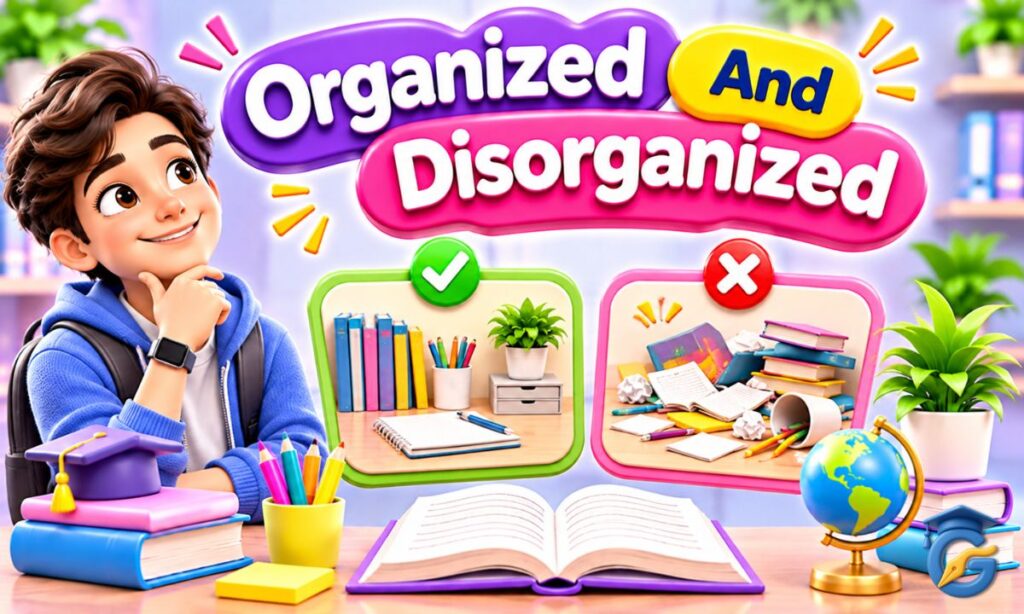
Organized and disorganized are opposites. An organized person plans ahead, keeps track of tasks, and knows where things are. A disorganized person may lose papers, miss deadlines, or feel overwhelmed. In the organised vs organized discussion, remember that the prefix dis changes the meaning but never changes the ending, so the z or s stays the same.
Both words are descriptive and not insulting when used kindly. You can say, “The project plan was disorganized, so we rebuilt it.” That sentence is honest and useful. In British English, you would write disorganised. Match the spelling of the opposite word to the spelling you used for the positive word.
Organized And Arranged
Arranged means placed in a certain order or position, such as flowers arranged in a vase. Organized goes a step further, because it suggests a system or plan behind the order. A bookshelf can be arranged by color, but it is organized when you can find any book quickly using a clear method.
The two words overlap, and many writers use them as near synonyms. The key difference is purpose. Arranged focuses on placement, while organized focuses on structure and function. Arranged has no spelling variant, so the organised vs organized question only matters when you choose the second word.
Organized And Structured
Structured describes how something is built, with parts that fit into a clear frame, such as a structured essay with an introduction, body, and conclusion. Organized describes how well those parts are arranged and managed. An essay can be structured and still feel messy, but a well organized essay flows smoothly for the reader.
When you write about people, organized fits better, because it suggests good habits. When you write about plans, lessons, or documents, structured often fits better, because it points to the framework. Since structured has no variants, only the organised vs organized pair needs your attention when you edit for a regional audience.
Expert Editor Insight
Editors rarely correct organized or organised on its own. They correct mixed styles. A document that uses organised, color, and organization in the same page tells readers that nobody checked it carefully. The best fix is simple: choose a regional style at the start and apply it to every word that changes between American and British English.
A second insight is that a style sheet saves time. List your preferred forms, such as organized, organization, realize, and center, and share the list with everyone who writes for you. This keeps the organised vs organized decision from being repeated in every project, and it gives your content a steady voice that readers learn to trust.
A Simple Memory Trick
Here is an easy way to remember the split. Think of the Z in ZIP code for the United States, because ZIP codes are American. Then think of the S in Sterling, the British pound, for the United Kingdom. Z goes with organized for American readers, and S goes with organised for British readers.
Tip: if your audience is global and you feel unsure, remember that organized with a z is accepted by American, Canadian, and Oxford style readers. A second quick check is to look at other words in your draft. If you wrote color and realize, keep organized. If you wrote colour and realise, keep organised.
Which Form Should You Use
Choose the spelling based on your readers, not on personal taste. Use organized for the United States and Canada, and use organised for the United Kingdom, Australia, and New Zealand. If you follow Oxford spelling, organized with a z is also acceptable. For the organised vs organized decision, audience always comes first.
After you choose, stay loyal to that choice. Set your editing tool to the right language, review related words such as organization and organizer, and read your headline and final paragraph once more. A consistent document looks professional, and readers will focus on your ideas instead of on small spelling differences.
Frequently Asked Questions
Is organized or organised more commonly used worldwide?
Organized is more widespread overall because of the large American and Canadian audience, while organised dominates in the United Kingdom, Australia, and New Zealand.
Can I use organized in British academic writing?
Yes, if your institution follows Oxford spelling or allows it, but always check the guidelines your school or journal gives you.
Does Canada use organized or organised?
Canada uses organized with a z, along with organization, as its standard spelling.
Is the spelling organize or organise preferred by Oxford?
Oxford style prefers organize with a z, based on the Greek origin of the ending.
Should I keep spelling consistent throughout an article?
Yes. Pick one style and apply it to every related word from the first line to the last.
Conclusion
The organised vs organized question has a simple answer: both are correct, and your audience decides which one to use. Choose organized for American and Canadian readers, organised for British, Australian, and New Zealand readers, and stay consistent with every related word. Keep the memory trick handy, check your style guide, and your writing will always look clear, careful, and professional.
